
The Executive Guide to Secure File Sharing and Virtual Data Rooms
In today’s digital landscape, managing corporate documents requires far more than simply optimizing file sizes or sending attachments via email. When your business is handling sensitive intellectual property, financial statements, or legal contracts, standard file-sharing methods expose you to significant security and compliance risks. To truly protect your critical business information, modern enterprises utilize a dedicated Virtual Data Room (VDR).
What is a Virtual Data Room?
A Virtual Data Room is a highly secure, cloud-based repository designed specifically for the distribution and storage of confidential corporate documents. Unlike basic consumer cloud storage, a professional VDR provides advanced security measures to control precisely how your files are accessed, shared, and tracked.
When executing high-stakes business transactions—such as mergers and acquisitions, legal audits, or corporate fundraising—a secure VDR serves as your digital fortress.
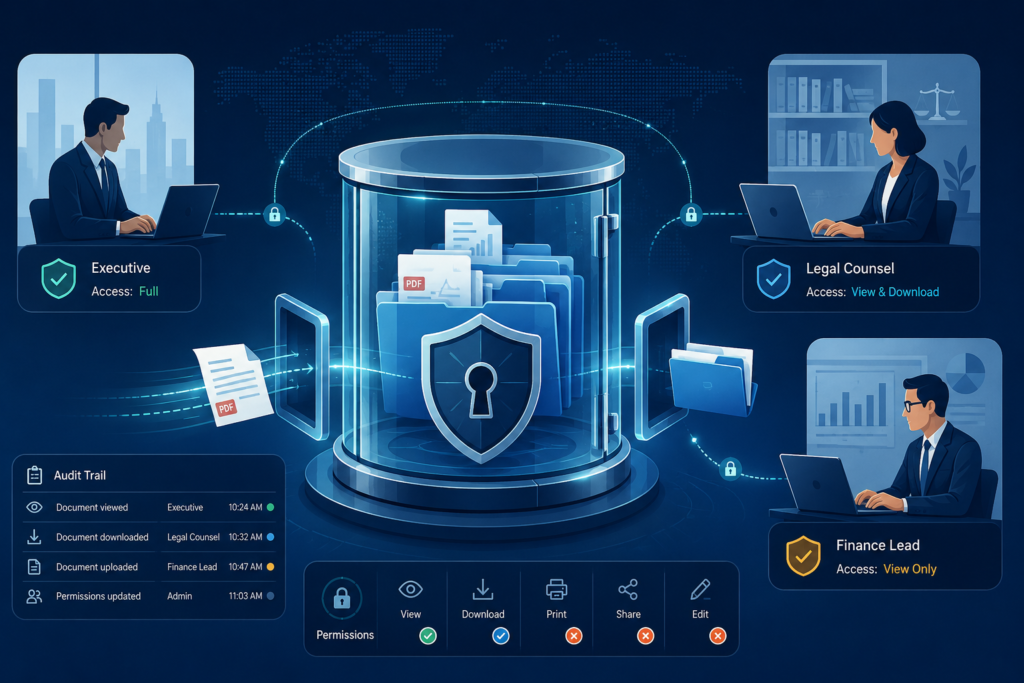
Key Features of Enterprise-Grade Document Security
To maintain total control over your business documents, look for solutions that offer:
- Granular Access Permissions: Restrict users from printing, downloading, or forwarding sensitive PDF files.
- Dynamic Watermarking: Automatically embed the viewer’s email and IP address onto the document to prevent unauthorized leaks.
- Real-Time Tracking & Auditing: Monitor exactly who opened a file, which pages they viewed, and how much time they spent analyzing the data.
Upgrading Your Document Workflow
For businesses and professionals looking to scale, securing your document workflow is a critical operational step. Transitioning your files to a professional Virtual Data Room or enterprise Cloud Storage Solution ensures that your data remains backed up, encrypted, and accessible only to authorized eyes